
ORTHODONTICS
Orthodontics represents one of dentistry subtypes aimed at the cause analysis of dento-alveolar diseases (disturbed occlusion or uneven dentition), diagnostics, treatment and prevention modalities.
It is popularly believed that orthodontics can solve only aesthetic issues. It is not the case!
The high-priority task of this dentistry line is the functional preservation of patient’s masticatory system.
Disturbed occlusion sooner or later may result in periodontal pocket formation, hygienic difficulties, the development of gingival and osseous diseases. Finally, it is disturbed occlusion that may become a cause of teeth loss.
AGE AND ORTHODONTIC TREATMENT
The majority of people are in the mistaken belief that one can employ the orthodontist’s services and correct the occlusion only in childhood and youth.
Nevertheless, state-of-the-art technologies support effective orthodontic treatment at any age, it is just that adults need a bit more time for that than children because of increased bone density.
TYPES OF ORTHODONTIC TREATMENT
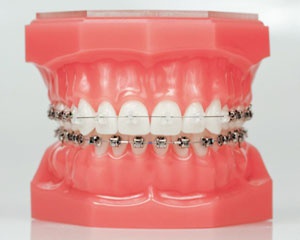
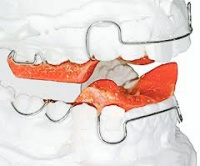
The principal types of orthodontic constructions include diverse braces, as well as fixed and non-fixed curative orthodontic appliances, which can be positioned on one or two jaws.
They can serve in different capacities, such important as palatal width or jawbone transformation. Non-fixed curative orthodontic appliances have more frequent application to children, among other things, they can be used for adults.
Our News
-

Dental health is linked to the intake of four vita... 27 Nov 2017
-

Popcorn destroys children's teeth 24 Nov 2017
-
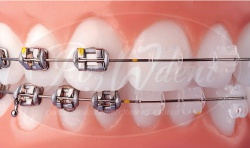
Braces in the dental center "InStom" 23 Oct 2017